When purchasing ELISA consumables, one of the most common questions laboratories ask is: Should we choose an ELISA strip or a traditional ELISA plate?
Although both products are designed for enzyme-linked immunosorbent assays, they serve different laboratory needs. The right choice depends on testing volume, operational efficiency, reagent costs, and workflow flexibility.
For diagnostic kit manufacturers, research laboratories, hospitals, and biotechnology companies, understanding these differences can help reduce operating costs while improving testing efficiency.
In this article, we'll compare ELISA strips and traditional ELISA plates to help you determine which solution best fits your laboratory.
What Is an ELISA Strip?
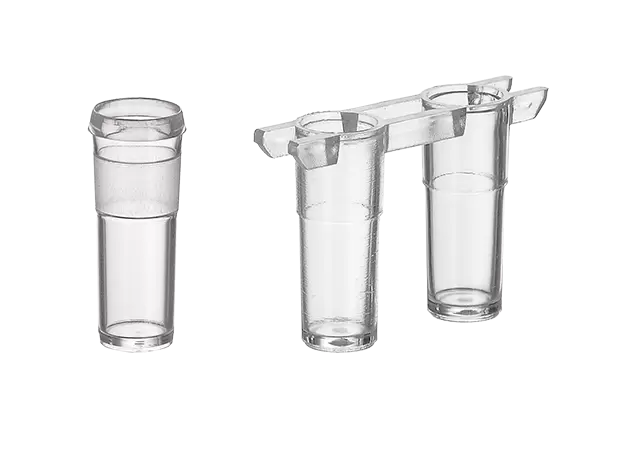
An ELISA strip consists of eight detachable microwells. Twelve strips can be assembled into a standard 96-well frame, allowing users to remove only the number of strips needed for each experiment.
Because unused strips remain sealed, laboratories can perform small or medium-sized assays without wasting consumables or reagents.
This modular design makes ELISA strips one of the most popular options for diagnostic laboratories with varying daily sample volumes.
What Is a Traditional ELISA Plate?
A traditional ELISA plate is a fixed 96-well microplate where all wells are permanently connected.
Once the package is opened, laboratories typically use the entire plate in one experiment to maintain consistency and avoid contamination.
Full plates are commonly selected by laboratories processing hundreds of samples every day because they maximize throughput and simplify automated workflows.
ELISA Strip vs ELISA Plate: What's the Difference?
1. Testing Flexibility
The biggest advantage of ELISA strips is flexibility.
If today's workload only includes 16 samples, technicians simply use two strips instead of opening an entire 96-well plate.
In contrast, fixed ELISA plates are more suitable for high-volume laboratories that routinely process large batches.
For laboratories with fluctuating workloads, ELISA strips significantly improve resource utilization.
2. Reagent Cost
Reagents account for a large percentage of ELISA testing costs.
Using an entire 96-well plate for a small number of samples often leads to unnecessary reagent waste.
ELISA strips allow laboratories to use only the required wells, reducing reagent consumption and lowering overall testing expenses.
For research laboratories with limited budgets, this advantage can be substantial over time.
3. Laboratory Efficiency
For low- and medium-throughput laboratories, ELISA strips simplify workflow by eliminating unused wells and reducing preparation time.
For high-throughput diagnostic centers equipped with automated ELISA systems, fixed plates remain the preferred choice because they support continuous batch processing.
Neither option is universally better—the optimal choice depends on laboratory workflow.
4. Storage and Inventory Management
ELISA strips are individually packaged or sealed in groups, allowing unused strips to remain protected until needed.
This extends usable inventory and helps laboratories better manage consumables.
Traditional ELISA plates generally require full use after opening, making inventory management less flexible.
5. Cost Effectiveness
Although the unit price of an ELISA strip may appear slightly higher, the overall testing cost is often lower because laboratories avoid wasting unused wells and expensive reagents.
For organizations that process inconsistent sample numbers each day, ELISA strips usually provide a better long-term return on investment.
Which Laboratories Should Choose ELISA Strips?
ELISA strips are particularly suitable for:
Clinical laboratories with varying daily sample volumes
Biotechnology companies developing new assays
University research laboratories
Veterinary diagnostic laboratories
Small and medium-sized testing centers
OEM diagnostic kit manufacturers
These users benefit from greater flexibility, lower reagent waste, and improved inventory control.
How to Choose a High-Quality ELISA Strip
Not all ELISA strips deliver the same performance. When selecting a supplier, buyers should evaluate several key factors.
Material Quality
Medical-grade polystyrene ensures excellent optical clarity and consistent protein adsorption.
Surface Treatment
Uniform surface activation improves antigen or antibody binding while reducing background noise.
Manufacturing Precision
Consistent well dimensions help minimize variation between experiments and improve reproducibility.
Batch Consistency
Reliable manufacturers perform strict quality control to ensure every production batch delivers stable assay performance.
OEM Capability
For diagnostic kit developers, manufacturers offering customized coating, packaging, and branding provide greater flexibility for product development.
Why Work with a Professional ELISA Strip Manufacturer?
A professional ELISA strip manufacturer offers more than just laboratory consumables. Advanced production equipment, automated molding, precision surface treatment, and rigorous quality inspection ensure every strip meets demanding laboratory standards.
In addition, experienced manufacturers provide OEM and ODM services, helping diagnostic companies customize strip configurations, packaging, and technical specifications for different markets.
Reliable manufacturing not only improves assay performance but also strengthens customer confidence and supports long-term business growth.
Conclusion
Both ELISA strips and traditional ELISA plates play important roles in modern laboratories, but they are designed for different testing needs.
If your laboratory values flexibility, lower reagent consumption, and cost-effective testing, an ELISA strip is often the better choice. For high-volume laboratories running full batches every day, fixed ELISA plates may offer greater efficiency.
Choosing a trusted ELISA strip manufacturer ensures consistent product quality, reliable assay performance, and flexible OEM solutions that support the success of your diagnostic or research projects.
Suggested URL Slug
/elisa-strip-vs-elisa-plate
Primary Keyword
Related SEO Keywords