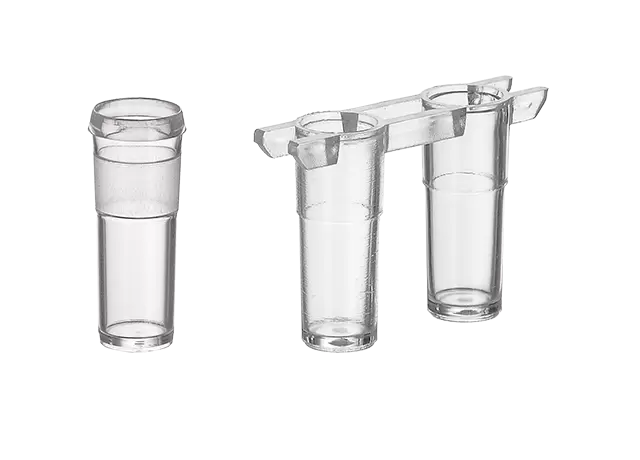
A plastic cuvette is an essential laboratory consumable for spectrophotometric analysis, offering a practical solution for routine sample measurement, quality control, and research applications. Compared with reusable glass cuvettes, disposable plastic cuvettes can help reduce cleaning requirements, minimize cross-contamination risks, and simplify laboratory workflows.
However, not every plastic cuvette is suitable for every sample or wavelength. Material compatibility, optical properties, path length, and dimensional consistency all influence measurement reliability. Understanding these factors helps laboratories select a plastic cuvette that meets their analytical requirements and supports consistent results.
How Plastic Cuvette Materials Affect Sample Compatibility
Material selection is one of the most important considerations when choosing a plastic cuvette. Different polymers offer different chemical resistance, optical characteristics, and suitability for specific analytical conditions.
Polystyrene Plastic Cuvettes for Routine Visible-Light Analysis
Polystyrene plastic cuvettes are commonly used for routine visible-light spectrophotometry. Their transparent optical surfaces make them suitable for many colorimetric assays, educational experiments, and general laboratory measurements within the appropriate wavelength range.
For laboratories conducting frequent visible-light testing, a polystyrene plastic cuvette can provide a convenient and economical option. The selected material should still be evaluated against the sample composition and the instrument's measurement requirements.
PMMA Plastic Cuvettes for Optical Transparency
PMMA, also known as acrylic, is valued for its optical transparency and appearance. A PMMA plastic cuvette can be suitable for applications requiring clear optical surfaces and consistent light transmission within its specified wavelength range.
When selecting PMMA cuvettes, laboratories should confirm that the material is compatible with the sample and that its optical properties meet the intended measurement conditions.
Chemical Compatibility of Plastic Cuvettes
Chemical compatibility determines whether a plastic cuvette can maintain its physical integrity during sample contact. Certain solvents, strong acids, or aggressive chemical solutions may cause swelling, deformation, stress cracking, or changes in optical performance.
Before using a plastic cuvette, laboratories should verify its chemical resistance against the sample formulation, concentration, and contact duration. This helps prevent sample leakage and measurement errors caused by material degradation.
How Plastic Cuvette Optical Performance Influences Measurement Accuracy
The optical quality of a plastic cuvette directly affects the light reaching the spectrophotometer detector. Optical defects or inconsistent transmission can influence absorbance readings and reduce measurement repeatability.
Optical Clarity of Plastic Cuvettes
Optical clarity is a key performance characteristic of a plastic cuvette. Clear, uniform optical surfaces allow light to pass through the sample with less unwanted scattering.
A plastic cuvette with visible scratches, cloudy surfaces, or molding defects may interfere with optical measurement. Laboratories should inspect the optical windows before use and select cuvettes designed for the required analytical performance.
Wavelength Range of Plastic Cuvettes
The usable wavelength range of a plastic cuvette depends primarily on its material. Some standard plastic materials are suitable for visible-light measurements but may absorb ultraviolet light, making them unsuitable for UV analysis.
When selecting a plastic cuvette, users should compare the material's specified transmission range with the operating wavelength of the spectrophotometer. For ultraviolet measurements, a UV-compatible material such as an appropriate grade of UV-transparent plastic may be required.
Optical Surface Consistency of Plastic Cuvettes
Consistent optical surfaces help maintain stable light transmission between measurements. Variations in surface flatness, thickness, or finish can introduce differences in optical behavior.
For reliable laboratory testing, a plastic cuvette should have well-defined optical windows and consistent surface quality. These characteristics are particularly important when comparing results across multiple disposable cuvettes.
Selecting the Correct Plastic Cuvette Path Length and Dimensions
The physical dimensions of a plastic cuvette must match the requirements of the spectrophotometer and the analytical method. A suitable design supports correct positioning, adequate sample volume, and consistent measurement geometry.
Path Length of Plastic Cuvettes
The path length is the distance that light travels through the sample inside the plastic cuvette. A standard 10 mm path length is widely used in spectrophotometric analysis, but other path lengths may be required for specific measurement conditions.
A longer path length generally produces a higher absorbance reading for the same sample concentration, while a shorter path length may be useful for highly concentrated samples. The appropriate plastic cuvette path length should be selected according to the analytical method and the instrument's specifications.
Sample Volume Capacity of Plastic Cuvettes
Sample volume capacity determines how much liquid is required for a measurement. A plastic cuvette with an appropriate capacity helps laboratories manage sample consumption while ensuring the liquid level adequately covers the optical path.
For low-volume testing, users should confirm the minimum filling volume required by the cuvette design and spectrophotometer. Insufficient sample volume may lead to unreliable readings if the optical beam does not pass fully through the liquid.
Dimensional Compatibility with Spectrophotometers
Dimensional compatibility ensures that a plastic cuvette fits securely into the instrument's sample holder. Differences in external dimensions, orientation, or positioning features may affect alignment with the optical beam.
Before purchasing plastic cuvettes in bulk, laboratories should confirm the required dimensions and holder compatibility. A properly fitted cuvette supports stable positioning and helps reduce measurement variation.
Plastic Cuvette Quality Control for Consistent Laboratory Results
For laboratories purchasing plastic cuvettes in large quantities, quality consistency is an important consideration. Stable product quality helps reduce variation between samples and supports reliable routine testing.
Dimensional Consistency of Plastic Cuvettes
Dimensional consistency ensures that plastic cuvettes maintain uniform external measurements and optical path geometry. Consistent dimensions support reliable fitting in spectrophotometer holders and help maintain repeatable positioning.
Manufacturers should maintain appropriate dimensional inspection procedures to control variation between production batches.
Batch-to-Batch Consistency of Plastic Cuvettes
Batch-to-batch consistency is important when laboratories use disposable plastic cuvettes for ongoing analytical work. Differences in material properties or optical performance between batches may affect measurement comparability.
A reliable supplier should maintain consistent production standards and provide suitable quality documentation when required by the customer.
Packaging Protection for Plastic Cuvettes
Packaging helps protect plastic cuvettes from dust, scratches, and handling damage during transportation and storage. Clean and well-protected optical surfaces are important for maintaining product usability before testing.
Laboratories should store plastic cuvettes according to the supplier's recommendations and avoid exposing optical surfaces to unnecessary contact or abrasion.
Conclusion
Choosing the right plastic cuvette requires careful consideration of material compatibility, optical performance, path length, dimensional accuracy, and quality consistency. A suitable cuvette should match the sample chemistry, measurement wavelength, and spectrophotometer design.
For laboratory buyers, evaluating these factors before procurement can help improve measurement reliability, simplify routine testing, and support consistent analytical results.