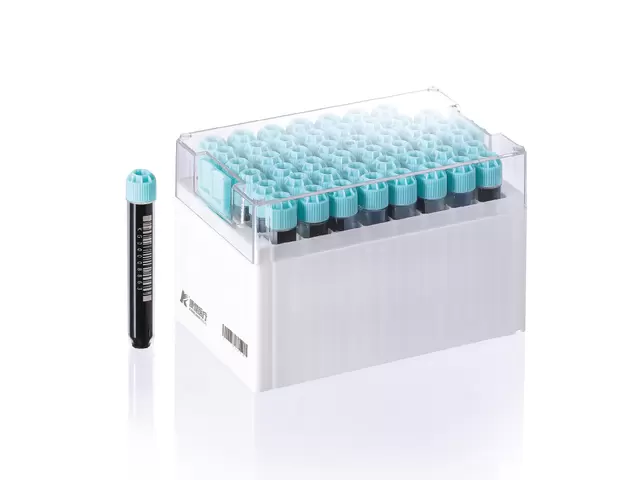
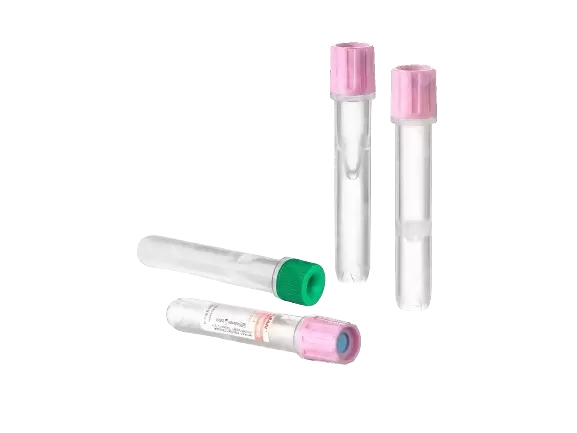
A disposable test tube is widely used in laboratories, medical facilities, educational institutions, and research environments for holding, mixing, heating, or processing small quantities of samples. Designed for single-use applications, it helps reduce cleaning requirements and the risk of cross-contamination when used and disposed of correctly.
However, disposable test tubes are not interchangeable across all applications. Material compatibility, tube dimensions, sample characteristics, temperature resistance, and closure requirements all affect their suitability. Selecting the right tube helps laboratories maintain reliable workflows and handle samples appropriately.
Key Materials and Types of Disposable Test Tubes
The material and design of a disposable test tube determine its chemical resistance, mechanical properties, and suitability for specific laboratory procedures.
Plastic Disposable Test Tubes
Plastic test tubes are commonly manufactured from materials such as polypropylene (PP) and polystyrene (PS). PP generally offers better chemical resistance and heat tolerance than standard PS, making it suitable for a broader range of laboratory procedures within its specified limits.
PS test tubes provide good transparency and are often used for routine sample handling and observation. However, they are generally less suitable for high-temperature applications and may be incompatible with certain solvents.
When selecting plastic tubes, laboratories should check the manufacturer's chemical compatibility data and maximum operating temperature rather than assuming that all plastic tubes perform alike.
Glass Disposable Test Tubes
Glass test tubes provide good transparency and resistance to many chemicals. They may be suitable for applications that require clear visual inspection or compatibility with reagents that are unsuitable for certain plastics.
Not all glass tubes are intended for single use, and their thermal and chemical performance depends on the glass composition and manufacturing specifications. If a laboratory requires disposable glass tubes, the product should be explicitly designed and supplied for that purpose.
Tube Shape, Capacity, and Closure
Disposable test tubes are available in different diameters, lengths, and capacities to accommodate various sample volumes and equipment configurations. Round-bottom designs are useful for general liquid handling, while other shapes may be selected for specific procedures.
Some tubes are supplied with caps or stoppers to reduce leakage and contamination. Closure compatibility matters when samples need to be transported, stored, or protected from environmental exposure. Buyers should confirm that the tube and closure are designed to work together.
Common Applications of Disposable Test Tubes
Disposable test tubes support sample handling across several industries, but the required specifications vary according to the procedure and sample type.
Medical and Diagnostic Laboratories
Medical laboratories may use disposable test tubes for selected sample preparation, reagent handling, and diagnostic workflows. However, a standard disposable test tube is not automatically suitable for collecting blood or other clinical specimens.
Applications involving patient samples may require validated collection tubes, specific additives, controlled sterility, or compatibility with diagnostic instruments. Laboratories should select products according to the requirements of the intended test and applicable medical-device regulations.
Research and Educational Laboratories
In research settings, disposable test tubes can hold small volumes of liquids, prepare mixtures, and support routine experimental procedures. Their single-use format reduces the time needed for washing and helps limit carryover between samples.
Educational laboratories also use disposable tubes for demonstrations and basic experiments. Material selection should reflect the chemicals, temperatures, and handling methods involved.
Industrial and Quality-Control Testing
Manufacturing facilities may use disposable test tubes to handle samples during product inspection, chemical analysis, and routine quality-control procedures. Consistent dimensions and material properties are important when tubes are used with racks, dispensers, or automated equipment.
For specialized testing, buyers should verify that the tube material will not react with the sample or interfere with the analytical method.
How to Select the Right Disposable Test Tube
Choosing a suitable tube starts with defining the sample, procedure, and operating conditions. A product that works well for routine liquid handling may not be appropriate for centrifugation, heated processes, or regulated diagnostic testing.
Material Compatibility and Temperature Resistance
The tube material must withstand the chemicals and temperatures involved in the intended procedure. PP may be appropriate for some chemical-handling and laboratory applications, while PS is often selected when transparency is a priority and operating conditions remain within its limits.
For heating or centrifugation, verify the manufacturer's approved operating conditions. A tube should not be used for these procedures unless its design and specifications explicitly support them.
Capacity, Dimensions, and Equipment Compatibility
Tube capacity should match the required sample volume while allowing sufficient space for mixing or other operations. External diameter and length should also fit the laboratory's racks, holders, and instruments.
For automated workflows, dimensional consistency can affect feeding, positioning, and handling reliability. Buyers should confirm tolerances and request technical drawings when compatibility is critical.
Sterility, Quality, and Packaging
Sterile disposable test tubes may be necessary for applications where microbiological contamination must be controlled. Nonsterile tubes may be suitable for routine tasks that do not require a sterile product.
Buyers should verify the sterilization method, packaging integrity, batch traceability, and relevant quality documentation when these factors affect the application. For clinical or regulated laboratory use, confirm that the product meets the applicable requirements for its intended purpose.
What to Look for in a Disposable Test Tube Supplier
For laboratories, distributors, and procurement teams, supplier selection affects product consistency, delivery reliability, and compliance with application requirements.
Manufacturing Consistency and Quality Control
A dependable manufacturer should maintain consistent tube dimensions, material specifications, and molding quality. Inspection procedures should address defects such as cracks, deformation, contamination, and inconsistent closures where applicable.
Documentation should clearly identify the product material, capacity, dimensions, packaging configuration, and intended use. This information helps buyers compare products and confirm suitability before ordering.
Customization and Bulk Supply
Laboratories and distributors may require specific capacities, tube dimensions, cap colors, packaging quantities, or labeling arrangements. OEM and private-label services can support these requirements when offered by the manufacturer.
Before placing a bulk order, confirm minimum order quantities, sample availability, production lead times, packaging specifications, and quality documentation. For regulated applications, customization should not compromise product validation or required compliance.
Conclusion
A disposable test tube should be selected according to its material, capacity, chemical compatibility, temperature limits, and intended laboratory use. Sterility, closure design, and equipment compatibility also matter when the tube is used in diagnostic, research, or industrial workflows.
For laboratory buyers and distributors, verifying product specifications and quality documentation before procurement helps ensure consistent handling and reduces the risk of choosing an unsuitable tube.