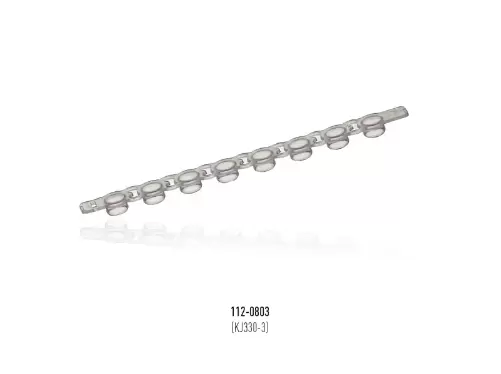
In modern clinical diagnostics and biochemical research, accuracy, repeatability, and optical precision are essential for reliable test results. Among the many critical consumables used in laboratory instrumentation, the cuvette for specific protein analyzer plays a fundamental role in ensuring measurement accuracy and consistency.
A cuvette for specific protein analyzer is a precision optical vessel designed to hold liquid samples during photometric or spectrophotometric analysis of protein concentrations. It is widely used in clinical laboratories, hospitals, research institutions, and biotechnology companies for the quantitative detection of specific proteins in biological samples such as serum, plasma, and reagents.
As the demand for high-throughput diagnostic testing continues to grow, the performance requirements for cuvettes have become increasingly strict. Optical clarity, dimensional accuracy, chemical resistance, and batch consistency are now critical parameters that directly affect analyzer performance.
This article provides a comprehensive technical and SEO-optimized overview of the cuvette for specific protein analyzer, including its structure, material science, working principle, manufacturing process, advantages, applications, and selection considerations.
What Is a Cuvette for Specific Protein Analyzer?
A cuvette for specific protein analyzer is a precision-engineered transparent container used in automated or semi-automated protein analyzers to hold liquid samples for optical measurement.
It is specifically designed for:
Immunoturbidimetric assays
Nephelometric protein detection
Colorimetric biochemical analysis
Clinical chemistry protein quantification
The cuvette must ensure that light passing through the sample is not distorted, scattered, or absorbed by the container itself, as even minor optical deviations can significantly affect test accuracy.
A typical cuvette for specific protein analyzer includes:
Optical-grade transparent walls
Precise internal geometry
Smooth inner surfaces
High chemical resistance material
Standardized dimensions for analyzer compatibility
Working Principle in Protein Analysis Systems
The cuvette for specific protein analyzer operates as a critical optical interface between the sample and the detection system of the analyzer.
1. Optical Measurement Principle
Most protein analyzers use spectrophotometric or turbidimetric methods. A light beam is passed through the sample contained in the cuvette, and the system measures:
Light absorption
Light scattering
Optical density changes
The cuvette must maintain optical neutrality to ensure that only the sample contributes to the measurement.
2. Reaction Environment Control
Inside the cuvette, biochemical reactions occur between reagents and specific proteins in the sample. The cuvette provides:
A controlled reaction chamber
Stable optical path length
Contamination-free environment
3. Signal Detection Accuracy
The analyzer detects changes in light intensity after interaction with the sample. The precision of a cuvette for specific protein analyzer directly influences:
Material Selection for Cuvette Manufacturing
The performance of a cuvette for specific protein analyzer depends heavily on material quality.
1. Optical Polystyrene (PS)
One of the most widely used materials due to:
2. PMMA (Polymethyl Methacrylate)
Used in higher-end applications requiring:
3. Quartz or Glass (High-End Applications)
For advanced laboratory systems, quartz cuvettes offer:
4. Material Purity Requirements
To ensure reliable performance, materials used in cuvette for specific protein analyzer must meet:
Medical-grade certification
Low protein adsorption properties
Free from optical impurities
Batch-to-batch consistency
Structural Design of Cuvette for Protein Analyzer
1. Optical Path Geometry
The internal geometry of the cuvette is designed to maintain a fixed optical path length, typically:
This ensures compatibility with analyzer calibration systems.
2. Wall Thickness Uniformity
Uniform wall thickness is essential to prevent:
3. Surface Smoothness
The inner surface is engineered to be extremely smooth to:
Prevent protein adsorption
Reduce reagent contamination
Ensure consistent reaction kinetics
4. Dimensional Precision
Cuvettes must meet strict tolerance requirements, often within micrometer-level accuracy, to ensure compatibility with automated analyzers.
Manufacturing Process of Cuvette for Specific Protein Analyzer
1. Precision Injection Molding
High-precision molds are used to form cuvettes with:
2. Mold Design Optimization
Molds are designed using CNC machining and optical simulation to ensure:
3. Cleanroom Production Environment
Manufacturing is conducted in controlled environments to prevent:
4. Post-Processing and Inspection
Each cuvette for specific protein analyzer undergoes:
Optical transmission testing
Dimensional verification
Leak testing (if applicable)
Surface defect inspection
Key Advantages of Cuvette for Specific Protein Analyzer
1. High Optical Transparency
Ensures accurate light transmission for precise protein measurement, minimizing signal distortion.
2. Excellent Chemical Resistance
Resists reagents used in biochemical assays, including:
Buffers
Enzymes
Diagnostic reagents
3. High Reproducibility
Batch consistency ensures stable performance across large-scale testing operations.
4. Compatibility with Automated Systems
Designed to integrate seamlessly with modern protein analyzers used in clinical laboratories.
5. Low Sample Contamination Risk
Smooth surfaces and inert materials reduce adsorption and cross-contamination.
6. Cost-Effective Disposable Design
Many cuvettes are designed for single-use, eliminating cleaning requirements and improving laboratory efficiency.
Application Areas in Medical and Scientific Fields
1. Clinical Diagnostics Laboratories
Used for routine protein testing such as:
2. Hospital Laboratory Systems
Essential in automated biochemical analyzers for rapid patient testing.
3. Biotechnology Research
Used in:
4. Pharmaceutical Industry
Supports:
5. Veterinary Diagnostics
Applied in animal health testing for protein-related biomarkers.
Quality Control Standards
High-quality cuvette for specific protein analyzer products must comply with strict standards, including:
ISO medical device standards
Biocompatibility testing
Optical transmission benchmarks
Dimensional tolerance control
Batch traceability systems
Industry Trends and Market Demand
The global demand for cuvette for specific protein analyzer continues to grow due to:
Expansion of clinical diagnostic testing
Increasing prevalence of chronic diseases
Rising demand for rapid testing solutions
Growth of automated laboratory systems
Advancements in protein-based diagnostics
Manufacturers are focusing on:
Higher optical precision
Low-cost disposable production
Automation-compatible designs
Improved material purity standards
Conclusion
The cuvette for specific protein analyzer is a critical consumable in modern clinical and biochemical testing systems. Its role in ensuring accurate optical measurement makes it indispensable in laboratories, hospitals, and research environments.
With precise optical engineering, high-quality materials, and strict manufacturing control, this component directly influences the reliability of protein analysis results.
As global healthcare and diagnostic industries continue to expand, demand for high-performance cuvettes for specific protein analyzers will continue to grow. For manufacturers, delivering consistent, high-precision cuvettes is essential for supporting the future of accurate and efficient medical diagnostics.